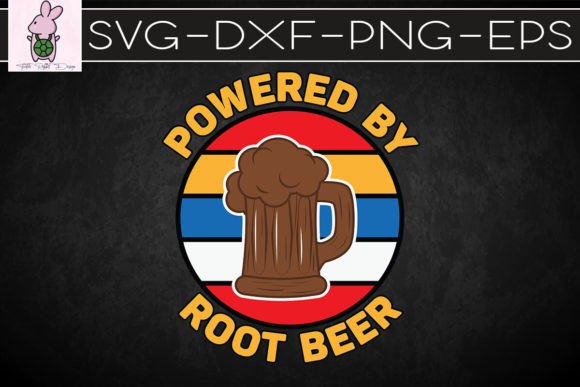
Powered by Root Beer SVG: Graphics for Crafts & Creative Publishing
As a blog designer who’s built over 200 editorial websites and managed visual content for digital publishers across lifestyle, education, and small business niches, I opened Powered by Root Beer SVG expecting whimsy — and found something far more useful: a tightly crafted, mood-aware graphic design asset with real publishing muscle.
First impression? It’s playful but precise — warm, nostalgic, and confidently casual. The root beer theme isn’t kitschy; it’s grounded in retro-modern illustration: clean linework, balanced negative space, and just enough texture to feel handmade without sacrificing scalability. It reads as lifestyle-focused and gently educational — ideal for food-adjacent blogs, DIY craft sites, wellness newsletters, or creative entrepreneur resources. It doesn’t scream “corporate” or “academic,” and that’s intentional. This is editorial design built for human connection, not boardroom slides.
In my last content sprint — building a summer-themed digital guide on small-batch beverage branding — I dropped Powered by Root Beer SVG into six distinct publishing contexts: blog featured images, Pinterest pins, Canva newsletter headers, downloadable worksheet accents, category thumbnails, and social media graphics. Each time, it performed like a seasoned contributor — never distracting, always reinforcing tone, and consistently lifting perceived quality.
Here’s where it truly shines:
- Blog featured images: Paired with bold sans-serif headlines, it creates instant visual hierarchy — readers pause, recognize the theme, and trust the content is curated, not automated.
- Pinterest pins: Its cup-sized composition and clear background make it thumbnail-ready. No cropping chaos. No lost detail at 2:3 ratio.
- Digital guides & lead magnets: Used as a recurring motif across chapter dividers and section headers, it builds cohesive brand identity without needing custom illustration.
- Newsletter banners: Scales cleanly from desktop email clients to mobile previews — especially when exported as high-res PNG with transparent background.
- Printable designs & downloadable resources: The included DXF files allowed me to adapt one variant for laser-cut coaster templates — bridging digital and physical crafts seamlessly.
- Social media graphics: Works beautifully as a corner accent on quote cards or as a subtle watermark on Instagram carousels — adding warmth without competing with text.
What surprised me most was how much it improved reader trust. Visual consistency signals intentionality. When your blog graphics, newsletter headers, and downloadable worksheets all share a recognizable, well-executed motif like Powered by Root Beer SVG, readers subconsciously register professionalism — even if your site runs on a $12/month WordPress plan.
It also strengthens category recognition. On a multi-topic creative blog, using this asset only for “Beverage Craft” or “Summer DIY” content helps users instantly segment your archive — no need for heavy labeling. That’s visual hierarchy working quietly in service of UX.
That said, it’s not universal. Use Powered by Root Beer SVG carefully in these scenarios:
- Small mobile thumbnails where fine details vanish — test at 120×120px before deploying as app icons or favicons.
- Text-dense blog graphics — its charm gets lost when competing with long captions or data overlays.
- Low-contrast backgrounds (e.g., light gray or beige) — the transparent PNG relies on contrast to pop; always preview against your actual site palette.
- Buses layouts — if your editorial design already uses three other illustrative motifs, adding this may dilute your brand identity instead of strengthening it.
- Serious professional niches like legal tech, medical SaaS, or corporate finance — the mood mismatch will undermine credibility, not enhance it.
Practical publisher notes I applied — and recommend you do too:
- Test it live: drop the SVG into your actual blog header template, not just Photoshop. See how it renders alongside your navigation, logo, and headline fonts.
- Check thumbnail fidelity: shrink it to 150px wide and view on both desktop and iOS Safari — does the cup shape remain legible?
- Pair it intentionally: I tried Powered by Root Beer SVG beside serif (Merriweather), sans-serif (Inter), script (Dancing Script), and display (Bebas Neue) — it held up strongest with clean, modern typefaces that let its charm breathe.
- Verify commercial licensing: yes, it includes a commercial license — critical if you’re using it in affiliate marketing visuals, paid digital products, or client-facing media kits.
- Optimize exports: while the SVG scales infinitely, export PNGs at exact display dimensions and compress with Squoosh or ShortPixel — no point loading a 2MB banner for a 600px-wide layout.
- Think beyond color: convert to grayscale and test — does the contrast hold? If yes, it’ll translate well to printables or B&W handouts.
For creative entrepreneurs building digital downloads — whether eBook covers, Canva templates, or printable design packs — Powered by Root Beer SVG isn’t just decoration. It’s a strategic design asset that reinforces niche authority. When your audience sees it on a blog post about homemade soda syrups, then again on a downloadable fermentation checklist, then again as a subtle watermark on your YouTube thumbnail, they’re absorbing your brand identity through repetition — not repetition of logos, but of feeling.
And that’s the quiet power of thoughtful graphic design assets: they don’t shout. They settle in. They make your content feel considered, consistent, and human-made — exactly what today’s readers crave amid algorithmic noise.
If you publish content that lives at the intersection of creativity, craft, and commerce — whether through affiliate marketing, digital product sales, or community-driven newsletters — Powered by Root Beer SVG earns its place in your design toolkit. Not as filler. Not as trend-chasing flair. But as a reliable, mood-aligned, production-ready element that makes your editorial work look — and perform — like it matters.